Spring.
Spring is a recurring seasonal motif in Arthur Miller's Death of a Salesman, a time of year that carries a double-edged significance for the Loman family. It is the season when Biff Loman, now thirty-four years old and adrift, returns home from the West, and it is the season that reawakens in him—and in his father, Willy—a painful awareness of time passing and dreams unfulfilled. The play's action unfolds over a single twenty-four-hour period, but spring functions as a temporal marker that connects the present to a past when the family's hopes seemed boundless, and it exposes the cruel irony of a season traditionally associated with renewal when what returns is only the same cycle of failure and longing.
The Season of Return and Recurring Disappointment
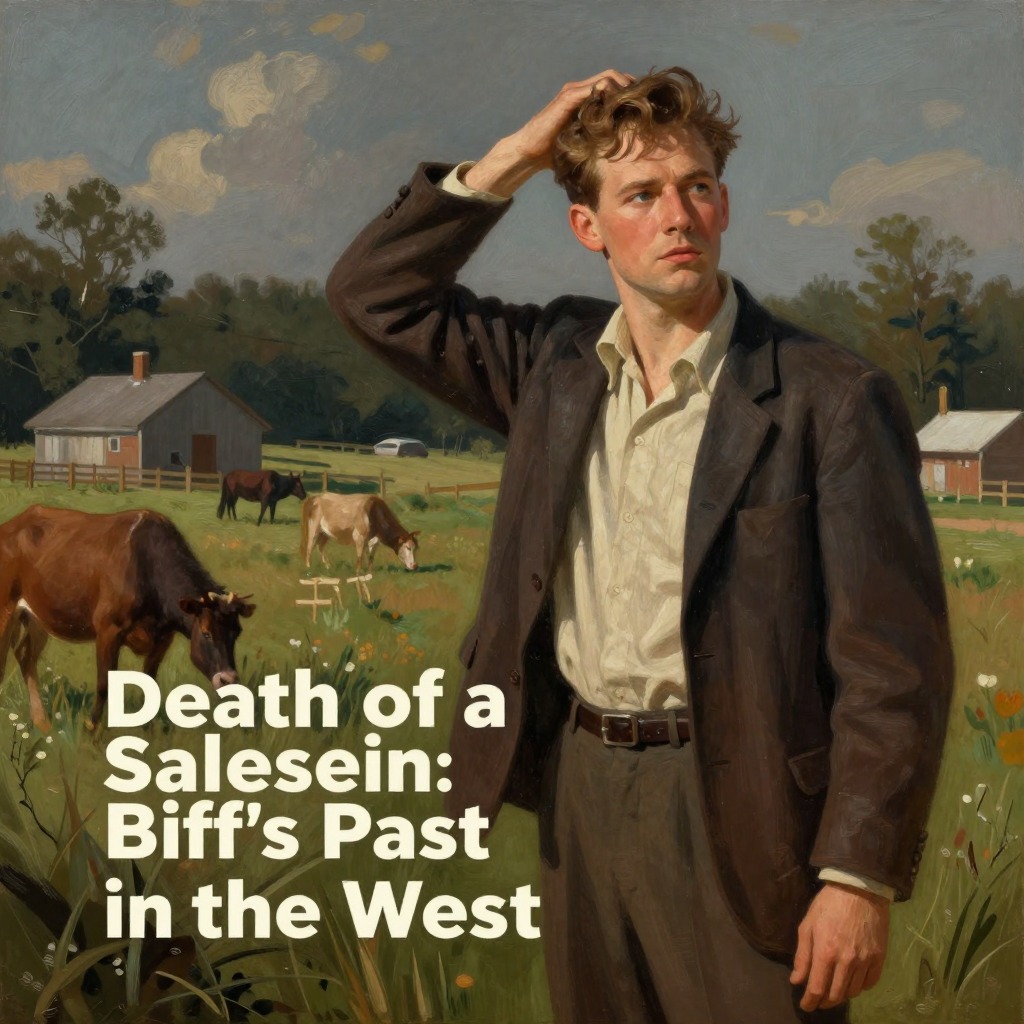
Biff's homecoming in the spring is not a new event but part of a pattern. As he explains to his brother Happy, the spring season itself is what drives him back: "And whenever spring comes to where I am, I suddenly get the feeling, my God, I'm not gettin' anywhere!" . The natural world's rebirth—the fifteen new colts on the Texas ranch where he works, the cooling air—triggers in him not contentment but a sense of inadequacy. "What the hell am I doing, playing around with horses, twenty-eight dollars a week!" he cries. "I'm thirty-four years old, I oughta be makin' my future. That's when I come running home" . Spring, then, is the season that exposes the fault line in Biff's life: he loves the outdoor work and the beauty of a mare with a new colt, but he has internalized his father's belief that a man must be "making his future," and spring's arrival makes that contradiction unbearable. Each spring he runs home, and each time he finds himself no closer to the success he was raised to expect.
The Spring of Memory and the Lost Past
Spring also belongs to Willy's remembered past, the era when the Loman house was surrounded by open country and the family's prospects seemed as fresh as the season itself. In his memory, Willy evokes a lost world of natural abundance: "This time of year it was lilac and wisteria. And then the peonies would come out, and the daffodils. What fragrance in this room!" . The spring of his memory is a time when the elm trees were still standing, when he and Biff hung a swing between them, and when the house felt "like being a million miles from the city" . The stage design itself reinforces this contrast: Jo Mielziner's original production used projection units to surround the Loman house with trees whose spring leaves stood "as a reminder of the springtime of Willy's life, at least as recalled by a man determined to romanticize a past when, he likes to believe, all was well with the world" . The spring leaves are a visual lie, a romanticized overlay on a present in which the trees are dead or dying and the house is hemmed in by apartment buildings. Spring in memory is the season of possibility; spring in the present is the season of bitter reckoning.
The Ironic Cycle of Hope and Failure
The play's structure traps its characters in a seasonal loop that offers no genuine renewal. Biff's springtime returns have become a ritual of false hope: he comes home, fights with his father, and leaves again, each time further from the promise of his high-school glory days. Linda Loman understands this pattern intimately. She tells Biff that when he writes he is coming, Willy "is all smiles, and talks about the future, and—he's just wonderful. And then the closer you seem to come, the more shaky he gets" . Spring brings the promise of a new beginning, but for the Lomans it delivers only the same old conflict. Biff himself recognizes the futility: "I've always made a point of not wasting my life, and everytime I come back here I know that all I've done is to waste my life" . The seasonal return becomes a measure of stasis, a revolving door through which the family passes without progress.
Thematic Significance: Spring as a Failed Promise
Spring in Death of a Salesman is ultimately a symbol of the American Dream's broken promise. The season that ought to bring growth and fruition instead brings only the return of old wounds and the confirmation of failure. Biff's confession that spring makes him feel he is "not gettin' anywhere" echoes Willy's own sense of being trapped in a life that yields no harvest. Willy, in his final desperate act, plants seeds in his garden by flashlight—a futile gesture of spring planting that can never bear fruit in the shadow of the apartment houses that have "boxed in the whole goddam neighborhood" . The seeds will not grow; the spring will not redeem. The play's seasonal motif thus reinforces its central tragedy: a man who has placed his faith in tomorrow, in the next season, in the promise of renewal, finds that spring itself has become an agent of reproach rather than hope.